Continuing Education Requirements for C-IAYT
C-IAYT recertification is required every 3 years. To be eligible for recertification you must:
🔵 (1). Maintain your annual IAYT membership.
🔵 (2). Submit at least 24 hours of IAYT approved continuing education (APD) within the 3 year period.
🔵 (3). Pass the online IAYT Ethics and Scope of Practice: Quiz (2 CEs) – for first time C-IAYTs. Pass the new online IAYT Ethics and Scope of Practice trainings (2 CEs) coming in 2020 for subsequent recertification.
| APD-IAYT Courses/ Workshops* |
|---|
| (1). Yoga for Heart Disease: Clinical Methods and Therapeutic Paradigms. [50 Hrs] |
| (2). Immunology for Yoga Therapists: Integration of ‘Modern Evidence-based Knowledge’ with ‘Ancient Experiencial Wisdom’. [30 Hrs] |
(1)

Yoga for Heart Disease: Clinical Methods and Therapeutic Paradigms.
(A Course-Workhop — Elementary to Advanced (50 Contact Hrs).
This course teaches:
(1). Clinical assessment of a subject (patient !) suffering from a cardiac ailment/ disese using modern diagnostic methods (Pulse Examination and Sphygmomanometry, ECG and Chest X-ray; Echocardiography, Cardiac-CT, MRI, Coronary Angiography.
(2). Designing and safe delivery of a ‘Therapeutic Yoga Session’ with special Asanas, relevant Pranayama, relaxing Meditation, empowering Bandhas, healing Mudras, &c . . .]]
********************ॐ********************

Clinical assessment of a subject (patient !) suffering from a cardiac ailment is of paramount importance; this is to ensure safe delivery of a therapeutic yoga-session.
Existing clinical status of the heart would call for choosing and framing a rational combination of special Asanas, relevant Pranayama, relaxing Meditation, empowering Bandhas, healing Mudras, &c . . . with various practical and necessary modifications essentially dictated by the ongoing clinical (medical/ surgical) condition of the heart that present to us for the ‘healing-intent’.
Understanding of the existing condition and it’s possible trajectory of reversal to normalcy can be reasonably foreseen by understanding etiopathophysiological journey the subject has had at the body-mind-soul plane. This will decide the Yogic-Therapeutic’ approaches that can be attempted.
Course Contents:
The Contents of the Course-Workshop primarily focus on delivering a “Rady-to -Practice” Yoga Therapy trainig, covering following Aspects:
(1). Heart in the Physical and Esoteric (energetic) planes, including elementry Embryology,
(2). Common Cardiac Ailments and Diseases,
(3). Baisics of the Fundamental Clinical Tools,
- Practiacl Patient Examination: Inspection, Palpation, Percussion, Auscultation.
- Pulse Examination and Sphygmomanometry.
- ECG and Chest X-ray. Echocardiography,
- Cardiac-CT, Magnetic Resonance.
- Cath. Coronary Angiography.
(4). Modern therapeutic approaches available (Medical/ Surgical).
(5). Multiplane (mind-body-soul) Yoga-therapy addressing existing morbidity at the level of “Gross (physical) and Subtle (energetic) Anatomy/ Physiology/ Pathology” of the Heart, using ‘Raja (Ashtanga) Yoga’, i.e.. Yama-Niyama, Asanas, Pranayama, Meditation, . . .
(6). Principles of Ayurveda relevant to Cardiac Diseases,
(7). Dietary and Psychological Counselling in the perspective of Yoga-Therapy,
(8). Complementary and Supplementary Integration of Yoga-Yheray into the Modern Medicine.
Daily Routine [5 hours every day x 10 days = 30 hours]:
(i). A typical daily ‘Heart Healthy Yoga-class’
(ii). Anatomy/ physiology/ Pathology (Theory & Practical-sessions),
(iii). Practical Clinical methods & Diagnostic tools (Basics of Theory, Interpretation, Implications & Integration into actual practice),
(iv). Therapeutic and Dietary Counselling.
(v). Heart-centric Ashtanga Yoga Practice:
- Asanas, Vinyasas, Chakras, Alignments;
- Pranayama, Bandhas, Chakras, Chanting;
- Meditation/ Mindfulness, Yoga-Nidra, Relaxation.
(vi). Q/A-Session for the day’s doubts.
Course delivery:
The whole course consists of 50 Hrs., starting from First Monday of every month; 5-Days (Monday to Friday)/ week; 5-hours/ day for 10 days ! (Small groups for a better one-to-one interactive learning) !!
Those who can’t attend the course during week-days can avail the opportunity of attending the course on first 4 weekends (Saturdays and Sundays) of the month; 6 – 7 Hrs./ day.
Faculty:

- Dr. Dhan R. Jangid, MD, DSc. E-RYT-500+, RPYT, RCYT, C-IAYT; [Course Director].
- Dr. Kritika Jangid, BDS, MDS, CTY-500, CTM-500; [Faculty for Yoga Anatomy, Physiology, Pathology].
- Ms. Vandana Jangid, MA, MCA, CTY-500, CTM-500. [Faculty for Yoga Philosopy, Psychology, Sociology/ Marketing].
COURSE CATEGORISATION AS PER I.A.Y.T.-STANDARDS
Yoga for Heart Disease: Clinical Methods and Therapeutic Paradigms. [A 3-Level Course-Workhop — Elementary, Intermediate, Advanced (30 contact hours each, Sequentially or through Lateral-entry !)]
(A). Course Categories:
- Clinical Skills
- Biomedical and Psychological Foundations
- Ayurveda and Yoga Therapy
(B). PRIMARY IAYT competency addressed in this course:
- Category 4.1. Providing Yoga Therapy
(C). ALL IAYT competencies addressed in this course:
- Category 1.3. Framework for Health and Disease
- Category 2.1. Anatomy and Physiology
- Category 2.2. Additional Biomedical Knowledge
- Category 2.5. Body and Mind Integration
- Category 3.1. Yoga Therapy Tools
- Category 4.1. Providing Yoga Therapy
(D). Course Details as per Learning objectives, IAYT Educational Competency related to the Learning Objective, and Evaluation Method for the Learning Objective:
(1). Learning Objective #1
* To learn ‘Clinical Assessment’ of a subject (patient !) suffering from a Cardiac Ailment/ Disease; this is to to ensure safe delivery of a therapeutic yoga- session.
** Existing clinical status of the heart shall help in choosing and framing a rational combination of Asanas, Pranayama, Meditation, Bandhas, Mudras, &c . . . to achieve therapeutic goal.
The Contents of the Course-Workshop primarily focus on delivering a “Rady-to-Practice” training.
IAYT Educational Competency related to Learning Objective #1
Category-3.1 Yoga Therapy Tools; Category-4.1 Providing Yoga Therapy.
Evaluation Method for Learning Objective #1
Evaluation Method (At the end of the day!):
* ‘Written Objective/ Multiple-Choice’ Test (10 Questions);
* ‘A write up on an Assigned Topic’ (At least 3-4 pages);
* ‘Viva Voce Test’ on all the topics covered (5-10 Minutes).
(2). Learning Objective #2
To understand existing cardiac condition and foresee it’s possible trajectory of reversal to normalcy by knowing etiopathophysiological journey the subject has had at the body-mind-soul plane. This could guide us decide the Yogic-Therapeutic’ approaches that can be attempted, and help us Integrate Complementary and Supplementary role of Yoga-Theray into the Modern Medicine.
IAYT Educational Competency related to Learning Objective #2
Category-1.3 Framework for Health and Disease; Category-2.1 Anatomy and Physiology; Category-2.5 Body and Mind Integration.
Evaluation Method for Learning Objective #2
Evaluation Method (At the end of the day!):
* ‘Written Objective/ Multiple-Choice’ Test (10 Questions);
* ‘A write up on an Assigned Topic’ (At least 3-4 pages);
* ‘Viva Voce Test’ on all the topics covered (5-10 Minutes).
(3). Learning Objective #3
To understand:
(1). Heart in the Physical and Esoteric planes,
(2). Common Cardiac Ailments and Diseases,
(3). Baisics of Fundamental Clinical Tools [Practiacal Patient Examination; Pulse Examination and Sphygmomanometry; ECG and Chest X-ray; Echocardiography, Cardiac-CT, Magnetic Resonance, Cath. Coronary Angiography . . . .
(4). Rational design of a ‘Therapetic Yoga Protocol’ for achieving the desired trajectory of recovery and healing.
To understand:
(1). Heart in the Physical and Esoteric planes,
(2). Common Cardiac Ailments and Diseases,
(3). Baisics of Fundamental Clinical Tools [Practiacal Patient Examination; Pulse Examination and Sphygmomanometry; ECG and Chest X-ray; Echocardiography, Cardiac-CT, Magnetic Resonance, Cath. Coronary Angiography . . . .
(4). Rational design of a ‘Therapetic Yoga Protocol’ for achieving the desired trajectory of recovery and healing.
IAYT Educational Competency related to Learning Objective #3
Category-2.2, Additional Biomedical Knowledge; Category-3.1 Yoga Therapy Tools.
Evaluation Method for Learning Objective #3
Evaluation Method (At the end of the day!):
* ‘Written Objective/ Multiple-Choice’ Test (10 Questions);
* ‘A write up on an Assigned Topic’ (At least 3-4 pages);
* ‘Practical Test’ on all the topics covered (5-10 Minutes).
(4). Learning Objective #4
To understand:
(1). Multiplane (mind-body-soul) Yoga-therapy addressing existing morbidity at the level of “Gross (physical) and Subtle (energetic) Anatomy/ Physiology/ Pathology” of the Heart, using ‘Raja (Ashtanga) Yoga’, i.e.. Yama-Niyama, Asanas, Pranayama, Meditation, . . .
(2). Principles of Ayurveda relevant to Cardiac Diseases,
(3). Dietary and Psychological Counselling in the perspective of Yoga- Therapy.
IAYT Educational Competency related to Learning Objective #4
Category-4.1 Providing Yoga Therapy; Category-2.5 Body and Mind Integration.
Evaluation Method for Learning Objective #4
Evaluation Method (At the end of the day!):
* ‘Written Objective/ Multiple-Choice’ Test (10 Questions);
* ‘A write up on an Assigned Yoga-Therapeutic Method’ (At least 3-4 pages);
* ‘Practical Demonstration’ on all the topics covered (5-10 Minutes).
(2)
Immunology for Yoga Therapists: Integration of ‘Modern Evidence-based Knowledge’ with ‘Ancient Experiencial Wisdom’
(A Course-Workhop — Basics to Advanced — 30 Contact Hrs].
This course teaches:
(1). Cellular Biology, Physiology and Biochemistry of Immune-System; Immuno-pathological process involving diseases; the immunological mechanisms of healing (recovery from diseases) processes; strategies for strengthening immunological status of the body.
(2). Integrating ‘Modern Evidence-based Knowledge’ with ‘Ancient Wisdom of Yoga Sciences (special Asanas, relevant Pranayama, relaxing Meditation, empowering Bandhas, healing Mudras, &c . . . .’ to alleviate disease and and restore health.
********************* ॐ *********************
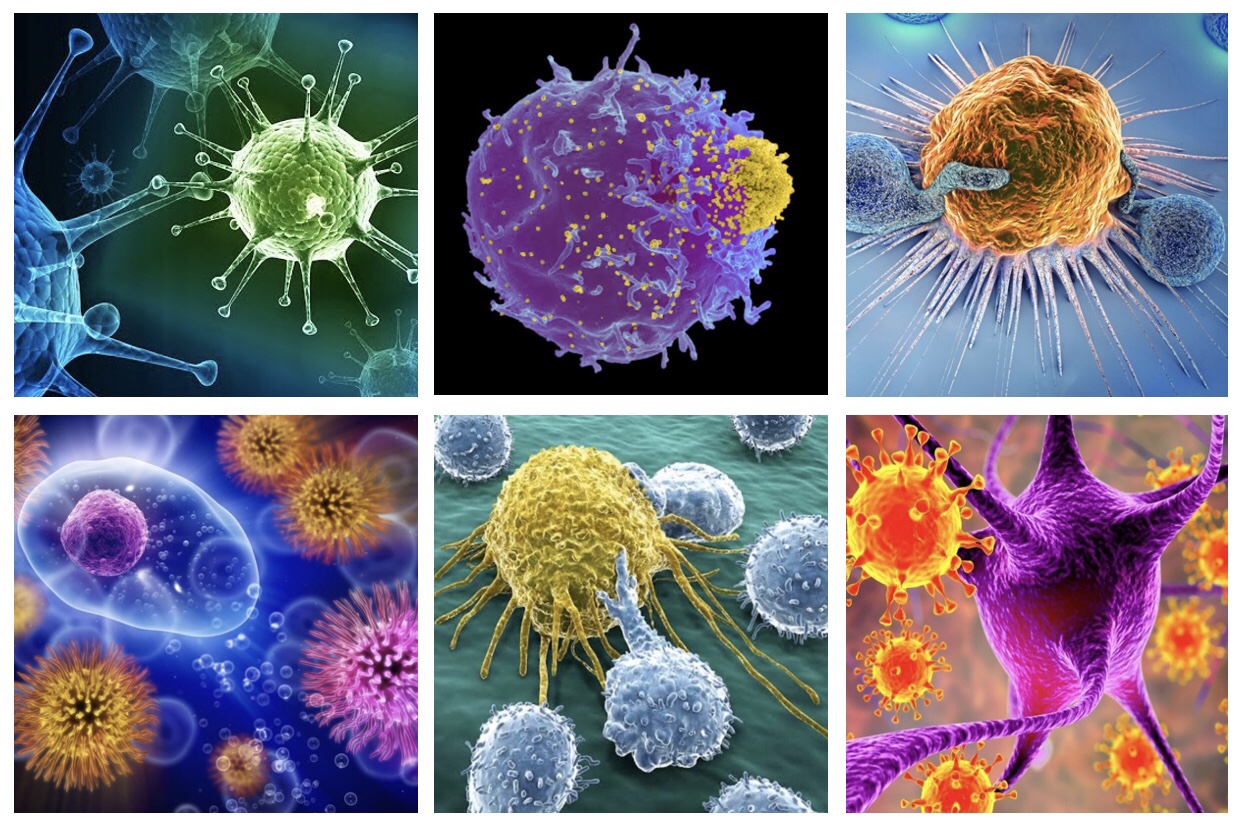
During the yearly turning-around of the weather, the chances of falling sick rise sharply. The body’s defence mechanism (Immunity !) weakened by modern lifestyles makes us vulnerable to catch the pathogens (viruses, bacteria, etc . . . .) from the people around us who’re already sick. Although we can’t avoid being in contact with those who are ill, but we can certainly work our way to strengthen our Immunity.
Modern Medicine does help us recover from the diseases but doesn’t improve body’s immunity. Yoga, perhaps, is one of the most effective ‘natural immunity boosters’ that takes away our blues and keep our health in pink. Through Yoga we can put up a strong preventive and preemptive resistance not only to the upcoming microbial infections, but also to fight even the neoplastic (cancerous !) processes.
Yoga (Yoga, Meditation, Ayurveda !) strengthens our Body-Mind-Soul, and thereby improves the body’s defense mechanism. A healthy life can be achieved through adopting a balanced lifestyle, proper food choices and regular practice of yoga and meditation.
Yoga is not an ‘Alternative’ to medicines but rather a ‘Complementary’ to keep diseases away !! By cultivating a homeostatic balance in our body and its systems through Yoga, we can support, nourish, strengthen and build our health, immunity, energy and overall quality of life.
Altough, we come to yoga for a number of reasons (viz. Stress relief; Increased flexibility, mobility and strength; for Spiritual gains and realisation of the Self, and Regaing/ Maintaining health and wellbeing), yet too often we don’t consider yoga as a tool to boost our immune system. However, a consistent yoga practice (along with certain poses in particular) can support and boost the immune system. Yoga:
(i). Resists the autonomic changes and impairment of cellular immunity, thereby keeping us and our cells healthy even when we’re stressed.
(ii). Reduces systemic stress in the body, which reduces inflammation, therby the body keeps working optimally and defending against the invading pathogens.
(iii). Creates a state of ‘calm even in the storm’, thereby maintaining a strong immune system.
(iv). Maintains an optimal wellness in our minds and bodies, thereby allaying the feeling of depletion and sickess.
(v). Supports a strong immune system, therby keeping all our body’s systems working optimally to prevent getting sick (or help us recover quicker).
A few simple yoga poses for immunity:
- Sitting and Breathing (Sukhasana and Pranayama)
- Half Lord of the Fishes (Ardha Matsyendrasana)
- Supported Fish Pose (Matsyasana Variation)
- Forward Fold (Uttanasana)
- Legs Up the Wall (Viparita Karani)
Yoga helps us fight infections by boosting our immune system, reducing stress and strengthening our body’s functions and systems:
- Psychological stress doubles the chance of a person getting a microbial (viral/ bacterial) infection. Yoga helps lower stress hormones, which compromise our immune system. Through relaxation, the nervous system tells the immune system to settle down and stop attacking the foreign bodies, so that inflammation is reduced and symptoms diminish.
- Breathing techniques (Pranayama) and Yoga postures (Asanas) help improve the mechanical efficiency of lungs by conditioning the respiratory tract that increase the elasticity and strength of the whole lung, thereby preventing airborne infections.
- Sitting at a desk for long hours as a part of Modern lifestyle, hemper circulation to our organs. This results in blockages and buildups of toxins and mucus that stimulate breakdowns in the body and its systems. Through yogasnas and pranayama different organs and glands are posed in various anatomical positions getting fresh blood, increased oxygen supply, gentle massage, relaxation and stimulation.
- Seasonal changes in atmospheric temperature, humidity, toxin-levels can cause dry skin, stiff joints and chill in our bones. Yogasanas help to lubricate our joints with synovial fluid, stabilise muscles by strengthening and vitalise immune system to reduce inflammation and detoxify the body.
Course Contents:
The Contents of the Course-Workshop primarily focus on delivering a “Rady-to -Practice” training, covering following Aspects:
(1). Anatomy and Physiology of Immune sstems; Immunosurveillance, Immunoprophylaxis.
(2). Cellular biology, Biochemisry and Pathology of Immune response.
(3). Clinical assessment for Immunosufficiecy and Immunodeficiency states [Basic Clinical Examination — Inspection, Palpation, Percussion, Auscultation; Pulse — Examination, Oxymetry, Sphygmomanometry; Thermometry; &c . . . . . ]
(4). A broad view of therapeutic approaches for management of Immunological Disorders in the perspective of Modern Medicine.
(5). Multiplane (mind-body-soul) Yoga-therapy approaches in addressing existing morbidity at the level of “Gross (physical) and Subtle (energetic) Anatomy/ Physiology/ Pathology” of the Immune-System, using ‘Raja (Ashtanga) Yoga’, i.e.. Yama-Niyama, Asanas, Pranayama, Meditation, . . .
(6). Principles of Ayurveda relevant to Immunological Disorders.
(7). Dietary and Psychological Counselling in the perspective of Yoga-Therapy of Immune Disorders.
(8). Complementary and Supplementary Integration of Yoga-Therapy into the Modern Medicine.
Daily Routine [Theory & Practice Classes: 5 hours every day x 10 days = 30 hours]:
(1). A typical daily ‘Yoga-sequence’ for building up and maintenance/ restitution of a strong and vibrant Immunological status of the body.
(2). Anatomy & Cellular Biology; Physiology & Biochemistry; Pharmacolotherapeutics & Pathology of Immune System.
(3). Immuno-centric Ashtanga Yoga Practice:
- Asanas, Vinyasas, Chakras, Alignments;
- Pranayama, Mindfulness, Chanting;
- Meditation, Yoga-Nidra, Relaxation.
(4). Principles of Ayurveda relevant to Immunological Disorders.
(5). Immunoprophylactic and Preventive strategies for diseases; Therapeutic and Dietary Counselling for an immune compromised subject.
(6). Practical demonstrations and Q/A-Session for the day’s doubts.
Course delivery:
The whole course consists of 30 Contact hours each.
Starting from July 2020 (5-Days — Monday to Friday per week, Every Month ! 6-hours per day !! (Small groups for a better one-to-one interactive learning) !!!
You can join at either of these levels depending on your present understanding/ competence of Immunological-Yoga. Also, those who can’t attend the course during week-days can avail the opportunity of attending a course on first 4 weekends (Saturdays and Sundays; 4 Hrs./ day) of the corresponding month.
Please write to us for details !
Faculty:
- Dr. Dhan R. Jangid, MD, DSc. E-RYT-500+, RPYT, RCYT, C-IAYT; [Course Director].
- Dr. Kritika Jangid, BDS, MDS, CTY-500, CTM-500; [Faculty for Yoga Anatomy, Physiology, Pathology].
- Ms. Vandana Jangid, MA, MCA, CTY-500, CTM-500. [Faculty for Yoga Philosopy, Psychology, Sociology/ Marketing].
COURSE CATEGORISATION AS PER I.A.Y.T.-STANDARDS
Immunology for Yoga Therapists: Integration of ‘Modern Evidence-based Knowledge’ with ‘Ancient Experiencial Wisdom’ [30 Contacts Hrs.]
(A). Course Categories:
- Clinical Skills
- Biomedical and Psychological Foundations
- Ayurveda and Yoga Therapy
(B). PRIMARY IAYT competency addressed in this course:
- Category 4.1. Providing Yoga Therapy
(C). ALL IAYT competencies addressed in this course:
- Category 1.3. Framework for Health and Disease
- Category 2.1. Anatomy and Physiology
- Category 2.2. Additional Biomedical Knowledge
- Category 2.5. Body and Mind Integration
- Category 3.1. Yoga Therapy Tools
- Category 4.1. Providing Yoga Therapy
(D). Course Details as per Learning objectives, IAYT Educational Competency related to the Learning Objective, and Evaluation Method for the Learning Objective:
(1). Learning Objective #1
* To learn ‘Clinical Assessment’ of a subject (patient !) suffering from an Immunological Disorder; this is to to ensure safe delivery of a therapeutic yoga- session.
** Existing clinical status of the heart shall help in choosing and framing a rational combination of Asanas, Pranayama, Meditation, Bandhas, Mudras, &c . . . to achieve therapeutic goal.
The Contents of the Course-Workshop primarily focus on delivering a “Rady-to-Practice” training.
IAYT Educational Competency related to Learning Objective #1
Category-3.1 Yoga Therapy Tools; Category-4.1 Providing Yoga Therapy.
Evaluation Method for Learning Objective #1
Evaluation Method (At the end of the day!):
* ‘Written Objective/ Multiple-Choice’ Test (10 Questions);
* ‘A write up on an Assigned Topic’ (At least 3-4 pages);
* ‘Viva Voce Test’ on all the topics covered (5-10 Minutes).
(2). Learning Objective #2
To understand existing immunological condition and foresee it’s possible trajectory of reversal to normalcy by knowing etiopathophysiological journey the subject has had at the body-mind-soul plane. This could guide us decide the Yogic-Therapeutic’ approaches that can be attempted, and help us Integrate Complementary and Supplementary role of Yoga-Theray into the Modern Medicine.
IAYT Educational Competency related to Learning Objective #2
Category-1.3 Framework for Health and Disease; Category-2.1 Anatomy and Physiology; Category-2.5 Body and Mind Integration.
Evaluation Method for Learning Objective #2
Evaluation Method (At the end of the day!):
* ‘Written Objective/ Multiple-Choice’ Test (10 Questions);
* ‘A write up on an Assigned Topic’ (At least 3-4 pages);
* ‘Viva Voce Test’ on all the topics covered (5-10 Minutes).
(3). Learning Objective #3
To understand: (1). Immune System in the Physical and Esoteric planes, (2). Common Ailments and Diseases in an immune compromised host, (3). Baisics of Fundamental Clinical Tools [Practiacal Patient Examination; Pulse Examination, ECG and Chest X-ray; CT, MRI, PETT . . . . (4). Rational design of a ‘Therapetic Yoga Protocol’ for achieving the desired trajectory of recovery and healing.
IAYT Educational Competency related to Learning Objective #3
Category-2.2, Additional Biomedical Knowledge; Category-3.1 Yoga Therapy Tools.
Evaluation Method for Learning Objective #3
Evaluation Method (At the end of the day!):
* ‘Written Objective/ Multiple-Choice’ Test (10 Questions);
* ‘A write up on an Assigned Topic’ (At least 3-4 pages);
* ‘Practical Test’ on all the topics covered (5-10 Minutes).
(4). Learning Objective #4
To understand:
(1). Multiplane (mind-body-soul) Yoga-therapy addressing existing morbidity at the level of “Gross (physical) and Subtle (energetic) Anatomy/ Physiology/ Pathology” of the Heart, using ‘Raja (Ashtanga) Yoga’, i.e.. Yama-Niyama, Asanas, Pranayama, Meditation, . . .
(2). Principles of Ayurveda relevant to Cardiac Diseases,
(3). Dietary and Psychological Counselling in the perspective of Yoga- Therapy.
IAYT Educational Competency related to Learning Objective #4
Category-4.1 Providing Yoga Therapy; Category-2.5 Body and Mind Integration.
Evaluation Method for Learning Objective #4
Evaluation Method (At the end of the day!):
* ‘Written Objective/ Multiple-Choice’ Test (10 Questions);
* ‘A write up on an Assigned Yoga-Therapeutic Method’ (At least 3-4 pages);
* ‘Practical Demonstration’ on all the topics covered (5-10 Minutes).
********************* ॐ *********************

TRAINING REQUIREMENTS AND DEFINITION FOR A YOGA THERAPY TRAINING PROGRAM (AS PER INTERNATIONAL ASSOCIATION OF YOGA THERAPISTS — I.A.Y.T.)
Listed below are the minimum requirements for a yoga therapy training program. Schools may choose to have additional requirements. It is recommended that schools develop an application form that includes a summary of the applicant’s previous training and experience. Definitions essential to understanding the requirements for training entry-level yoga therapists follow the requirements outlined below.
Section 1. Minimum Admission Requirements
1.1 To ensure that students have a basic foundation in yoga teaching, the minimum admission requirement for a yoga therapy training program is a 200-hour teacher training, such as a Yoga Alliance 200-hour registered school program (RYS 200) or its equivalent.
1.2 In addition to minimum yoga teacher training, students must have completed the following, which can be accomplished concurrently:
1.2.1 one year of teaching experience, with specifics to be determined by the school; and
1.2.2 one year of personal practice, with specifics to be determined by the school.
********************************************
Section 2. Length of Program
2.1 An entry-level yoga therapy training program must be at least 800 hours total and taught over a minimum of two years. Schools may choose to allow more time for completion of the 800 hours.
2.1.1 The 800 hours does not include the admission requirements.
********************************************
Section 3. Curriculum and Hours in the Program
3.1 The curriculum addresses all competencies in the Competencies Profile
3.1.1 The curriculum may draw upon a range of yoga perspectives from different lineages and/or traditions; however, these perspectives must be integrated into a unified, cohesive perspective that is clearly reflected in the program.This perspective formulates the philosophical foundation for the practical application of the yoga therapy approach taught in the program.
3.1.2 The curriculum is delivered in such a way that allows students to acquire knowledge and develop the skills outlined in the Competencies Profile in a progressive and systematic manner, enabling them to design individualized yoga therapy protocols.
3.2 The total program must have a minimum of 800 hours.
3.2.1 Of the minimum 800 hours, a minimum of 500 hours must be residential hours in the accredited program’s curriculum.
3.2.2 Of the minimum 800 hours, a maximum of 300 hours may be distance learning hours.
3.2.3 The practicum portion of the program must be a minimum of 205 hours.
3.2.3.1 Of the 205 practicum hours, practicum delivery hours must total a minimum of 150 hours in which the student provides one-on-one or group yoga therapy sessions.
3.2.3.2 Of the 205 practicum hours, practicum documentation and mentorship hours must total a minimum of 55 hours.
3.2.3.3 Practicum delivery hours may be conducted in an in-house clinic/classroom, community setting, or other appropriate location.
3.2.4 Homework and personal practice may not be counted toward program hours.
3.2.5 Up to 300 transfer hours from another school program or course may be transferred at the discretion of the school.
3.2.5.1 Transfer hours must apply directly to a required competency(ies).
3.3 All practicum delivery hours must be mentored by a faculty member or assigned mentor and assessed.
3.3.1 Mentoring for practicum delivery is accomplished through oversight by an assigned faculty member or mentor who provides guidance and feedback to the student throughout their practicum delivery experience.
3.3.2 All practicum delivery hours must be documented and reviewed by the mentor.
3.3.3 A faculty member or assigned mentor is not required to be present at yoga therapy delivery sessions.
3.3.4 All mentored hours must be related to yoga therapy, the preparation for and review of practicum cases, and the growth of the student’s ability to deliver yoga therapy.
3.4 Schools must designate practicum documentation and mentorship hours that help a student actively develop a clinical practice through a mentored experience.
3.4.1 The practicum documentation and mentorship hours contribute to a student’s development of the competencies addressed in section 4 of the Competency Profile.
3.4.2 Practicum documentation and mentorship hours may be a combination of residential hours and distance learning hours.
3.4.2.1 Hours spent in communication, either in person or at a distance, between astudent and an assigned mentor regarding the student’s yoga therapy studies or yoga therapy cases must be documented.
3.4.2.2 One-on-one practicum mentorship offered via web-based tools or telephone may be counted towards residential hours, so long as they are conducted in real time.
********************************************
Section 4. Distance Learning
4.1 Distance learning is supervised and delivered by the program’s faculty members.
4.1.1 Distance learning presents and addresses one or more competency in the core curriculum or fulfills hours within the practicum component of a program.
4.1.2 Distance-learning courses are facilitated by a faculty member.
4.1.3 Material for distance-learning courses is prepared in a logical sequence and delivered to the student in an academic format (e.g., reading assignments with study guides, instructional DVDs, online prerecorded material).
4.1.4 Distance learning hours are pre-determined.
4.1.5 Distance learning hours are assessed and evaluated.
********************************************
Section 5. Directors, Faculty Members, and Mentors
5.1 The school director determines educational objectives and activities of any course or program area, including, but not limited to, measures; assessments; records; reports or evaluation of students’ attendance; and achievement or completion of lessons, courses, or training program.
5.1.1 The school director oversees the essential student records and data for which he or she is responsible, according to state law or school policy, and exercises technical and functional supervision over instructional staff, aides, or volunteers.
5.1.2 If there is no school director, the responsibilities of the school director may be met by the program director.
5.2 The program director(s) oversees the total training program, regardless of the amount of time in the classroom.
5.2.1 The program director(s) supervises and advises faculty members and assigned mentors, and is supervised by the school director when one exists.
5.2.2 The program director(s) is a C-IAYT.
5.2.3 The program director(s) has a thorough understanding of the range and depth of the subject matter to be taught in the curriculum.
5.2.4 The program director(s) has the expertise with which to assess faculty qualifications for each course within the curriculum.
5.2.5 The program director(s) has a minimum of five years practical experience in yoga therapy.
5.3 Faculty members have well-established expertise and experience in the course(s) they teach, including training, certification, or a diploma in the field in which they teach, along with a minimum of three years practical experience in the field in which they teach.
5.3.1 Faculty members are employed or contracted by a school to provide either a classroom or distance-learning course/program for the purpose of delivering instruction or training necessary to meet the stated objectives of the course/program.
5.3.2 Faculty members are supervised by the school director or the school’s program director.
5.4 Mentors are approved by the school to supervise a student(s) in training, whether in person, on the telephone, or through other electronic media formats, such as computer, as determined by the school.
5.4.1 Mentors are appointed by the program director.
5.4.2 Mentors are supervised by the program director or a faculty member.
********************************************
 Dharāj Yoga Therapy